A Brief History
SSL was originally developed by Netscape in the early 1990s. As security vulnerabilities were discovered, new versions were released:
- SSL 1.0: Never released publicly due to flaws.
- SSL 2.0: Released in 1995 (now deprecated).
- SSL 3.0: Released in 1996 (now deprecated and insecure).
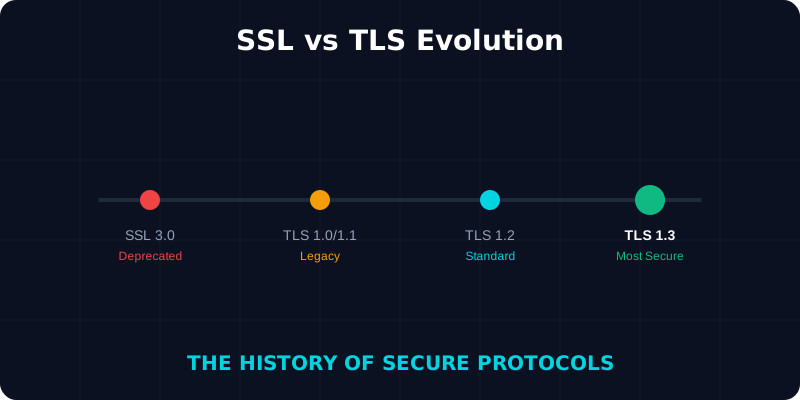
In 1999, the first version of TLS (1.0) was released as an upgrade to SSL 3.0. Since then, we've moved through TLS 1.1 and 1.2, up to the current modern standard, TLS 1.3.
Technical Differences
TLS offers several critical improvements over the old SSL protocols:
1. Stronger Authentication
TLS uses more secure Message Authentication Codes (MAC) and hashing algorithms, making it much harder for attackers to tamper with data in transit.
2. Faster Handshakes
TLS 1.3, in particular, has optimized the "handshake" process. It requires fewer round-trips between the browser and server, resulting in faster page load times.
3. Improved Cipher Suites
TLS has removed support for old, weak encryption algorithms that are susceptible to modern hacking techniques like POODLE or BEAST.
Why do we still say "SSL"?
If TLS is what we actually use, why does everyone call them SSL certificates? The answer is simply branding. The term "SSL" became so widely known that Certificate Authorities and security companies continued using it to avoid confusing customers.
When you buy an "SSL Certificate" today, you are actually buying a certificate that is protocol-agnostic. The level of encryption is determined by your server configuration and the visitor's browser, not the certificate itself.