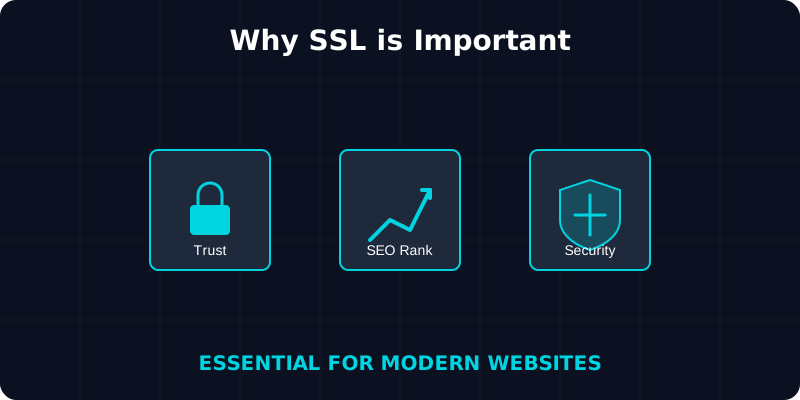
1. Data Security & Protection
The core function of an SSL certificate is to protect the data transmitted between a visitor's browser and your server. By encrypting this communication, SSL prevents "Man-in-the-Middle" attacks where hackers intercept sensitive information.
Even if you don't process payments, hackers can still steal login session cookies, contact form data, or inject malicious scripts into your site if it's not secured with HTTPS.
2. Visitor Trust & Credibility
Modern internet users are increasingly aware of online security. Visual trust indicators like the padlock icon and the HTTPS protocol give visitors immediate peace of mind that their interaction with your site is private.
Without SSL, browsers like Google Chrome will display a "Not Secure" warning next to your URL. This warning significantly increases "bounce rates," as users are likely to leave a site that looks untrustworthy.
3. SEO & Search Rankings
Since 2014, Google has officially confirmed that HTTPS is a ranking factor. All other things being equal, a secure website will rank higher in search results than an insecure one. Google's mission is to make the web safer, and they reward site owners who prioritize security.
4. Regulatory Compliance (GDPR/PCI)
If you collect any personal data from EU citizens, the GDPR requires you to take appropriate security measures to protect that data — and SSL is the industry standard. Likewise, if you handle credit card information, PCI DSS compliance strictly requires the use of SSL/TLS for transmitting cardholder data.
Conclusion
In 2026, an SSL certificate is as fundamental to a website as its domain name. It protects your visitors, boosts your SEO, avoids scary browser warnings, and builds the trust necessary to convert visitors into customers.