


 Log In
 Register
 SSL Brands
 Sectigo SSL Certificates
 RapidSSL Certificates
 Thawte SSL Certificates
 GeoTrust SSL Certificates
 DigiCert SSL Certificates
 Certificates
 Single Domain Certificates
 SSL Tools
 CSR Generator
 CSR Decoder
 SSL Certificate Decoder
 SSL Certificate Checker
 SSL / Key Matcher
 SSL Certificate Converter
 Contact
 Games
Games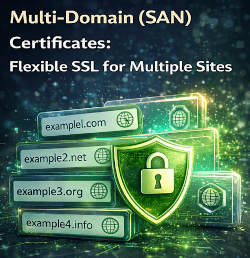 Multi-Domain (SAN) Certificates
Multi-Domain SSL certificates, also known as Subject Alternative Name (SAN) certificates or Unified Communications Certificates (UCC), allow you to secure multiple different domain names with a single certificate. They provide flexibility for organizations managing several distinct websites or services.
Buy Multi Domain SSLs at: https://mysslpro.com/multiple-domains-ssl-certificate/
How SAN Certificates Work
Multiple Domain Coverage. A single SAN certificate can secure completely different domain names like example.com, mystore.net, and companysite.org all in one certificate.
Subject Alternative Name Field. The certificate includes a SAN field that lists all the approved domain names, allowing browsers to recognize each domain as legitimately secured.
Flexible Domain Types. SAN certificates can include regular domains, subdomains, and even IP addresses within the same certificate, depending on the Certificate Authority’s policies.
Domain Limits and Capacity
Standard Inclusions. Most SAN certificates include 2-5 domain names in the base price, with options to add more domains for additional fees.
Maximum Capacity. Depending on the Certificate Authority, SAN certificates can typically secure up to 100-250 different domain names.
Domain Addition. Many providers allow you to add or remove domains during the certificate’s validity period through reissuance processes.
Validation Types
Domain Validated SAN. The most common option, requiring domain ownership verification for each included domain name.
Organization Validated SAN. Includes organizational verification along with multi-domain functionality for enhanced business credibility.
Extended Validation SAN. Provides the highest level of validation for all included domains, though this option is less common and more expensive.
Best Use Cases
SAN certificates are perfect for:
-
- Companies managing multiple brand websites
- Organizations with separate domains for different services
- Microsoft Exchange and Office 365 environments
- Businesses with multiple country-specific domains (.com, .co.uk, .de)
- Service providers hosting multiple client domains
- Companies with both www and non-www versions plus additional domains
Management Benefits
Simplified Administration. One certificate to install, monitor, and renew instead of managing multiple separate certificates.
Cost Efficiency. Generally more affordable than purchasing individual certificates for each domain when securing 3+ domains.
Unified Expiration. All domains share the same expiration date, simplifying renewal scheduling and certificate management.
Limitations
All Domains Visible. Every domain name included in the certificate is visible to anyone who examines the certificate details, which may not be desirable for some organizations.
Single Point of Failure. If the certificate is compromised or expires, all included domains lose SSL protection simultaneously.
Reissuance Complexity. Adding or removing domains typically requires certificate reissuance, which may involve downtime and additional validation.
Cost Considerations
SAN certificates typically cost more than single-domain certificates but less than buying individual certificates for each domain. Pricing often includes 2-5 domains in the base cost, with additional domains priced per domain added.
For organizations managing multiple distinct domain names, SAN certificates offer an efficient solution that balances cost, management complexity, and security across diverse web properties.